
Esaiyo Mobile App UI/UX Design

Project: Esaiyo – Weaving a Digital Tapestry for Objects
Challenge
UI/UX design project for the Esaiyo platform, a groundbreaking solution that aims to digitally capture and connect the stories of physical and virtual objects came with its challenges. They lay in creating an intuitive information architecture and engaging experience for users to interact with a novel concept, encompassing both technical and emotional considerations.
Research and User Understanding
To understand user needs and perspectives, I employed various research methods:
- Expert Interviews: Consulted with historians, archivists, and object conservators to gain insights into best practices for object documentation and preservation.
- User Interviews: Conducted interviews with individuals from diverse backgrounds, including artists, collectors, and technology enthusiasts, to understand their motivations for connecting with objects and their expectations from a digital platform.
- Competitive Analysis: Analysed existing object-related platforms like online museums and auction houses, identifying strengths and weaknesses in user experience.
Personas
User personas representing key user groups:
- The Storyteller: An individual passionate about preserving the history and legacy of personal objects, seeking an accessible platform to share their stories.
- The Collector: An individual interested in cataloguing and researching their collection, seeking detailed and accurate object information.
- The Explorer: A curious individual who enjoys discovering the stories and connections behind objects, looking for an engaging and interactive platform.
User Pain Points
Several common user pain points have been outlined:
- Limited options for capturing and sharing object narratives: Existing solutions offered a limited scope for storytelling, often focusing solely on object descriptions or images.
- Challenges in documenting object history and provenance: Lack of user-friendly tools made it difficult for individuals to document and share the intricate history and ownership of their objects.
- Difficulty connecting with objects on a personal level: Existing platforms often presented objects as static entities, missing the opportunity to evoke emotions or foster deeper connections.
User Stories
As a UI/UX designer, I am proud to have contributed to a platform that bridges the physical and digital worlds, allowing users to weave a digital tapestry of memories and stories around the objects that hold significance in their lives.
- As a Storyteller, I want to easily upload photos, videos, and written narratives to capture the stories and memories associated with my objects.
- As a Collector, I need a secure platform where I can document detailed object information, including provenance, condition, and value.
- As an Explorer, I want to discover and explore the stories behind objects, connecting with the past and fostering a deeper appreciation for them.
Solution
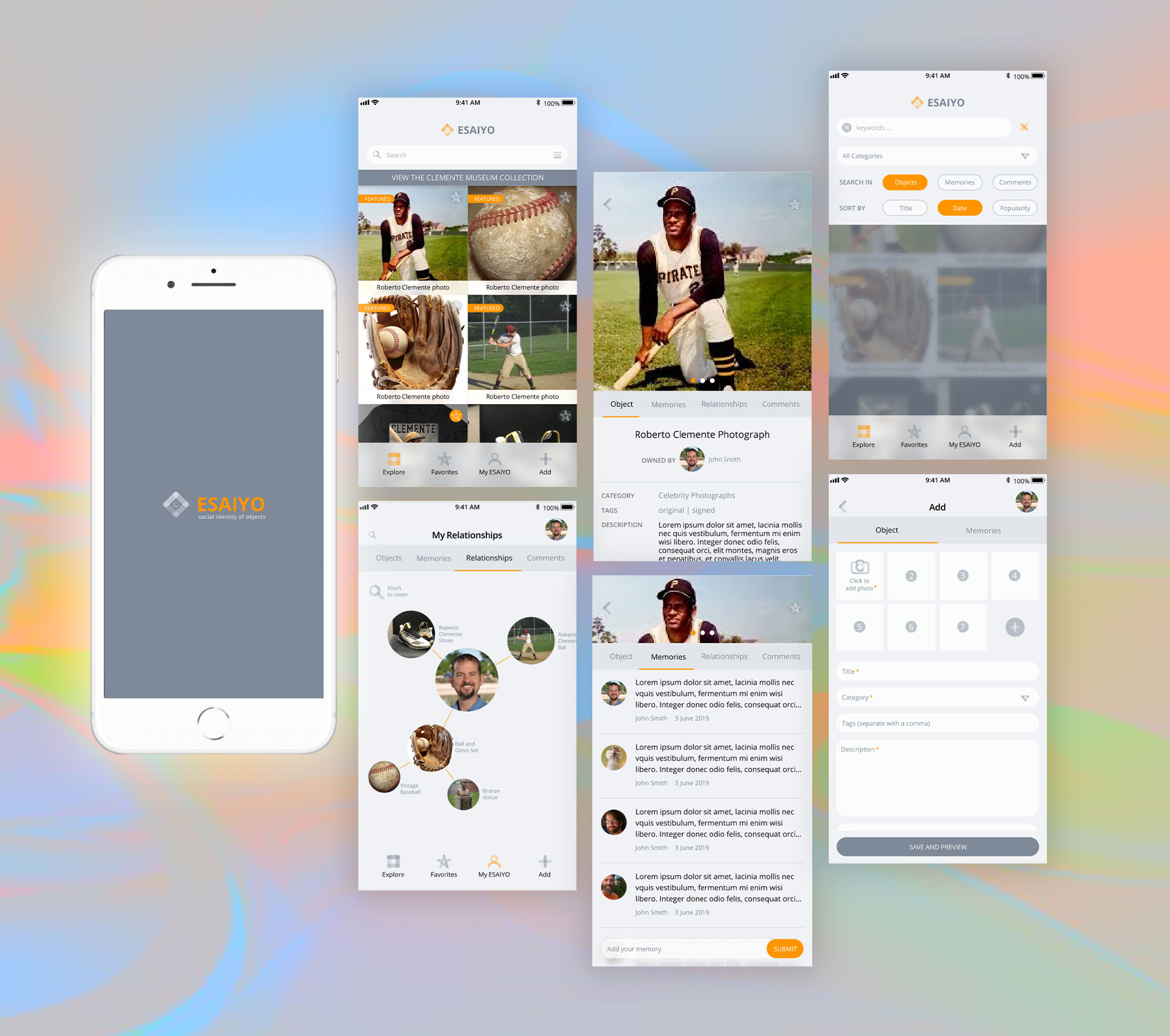
I designed the Esaiyo platform with a focus on storytelling, accessibility, and emotional connection:
- Intuitive Object Capture: A user-friendly interface allows users to capture various aspects of an object, including photos, videos, 3D scans, and detailed descriptions.
- Interactive Storytelling Tools: The platform provides various tools for users to weave narratives around their objects, including timelines, annotations, and multimedia content integration.
- Visual Exploration and Discovery: A visually appealing interface and intuitive search functionalities facilitate exploration and discovery of objects and their stories.
Outcome
The Esaiyo platform empowers users to connect with and share the stories of objects in a meaningful way. By providing a holistic user experience that combines technology, storytelling, and emotional engagement, Esaiyo fosters a deeper appreciation for the objects that surround us and their unique legacies.